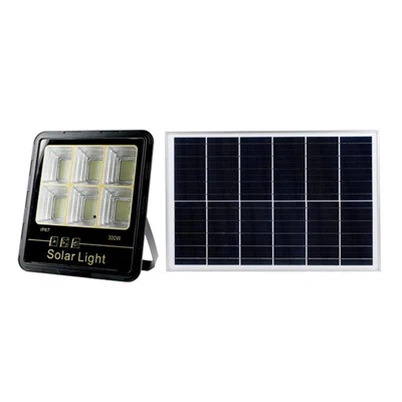
How long do solar garden lights last on cloudy days?
Leave a message
The duration of solar garden lights in cloudy weather depends on a number of factors, including but not limited to the design of the light fixture, the battery capacity, the efficiency of the solar panels, and the intelligent management features of the controller. Typically, a well-designed solar garden light can maintain illumination for 3-7 days under continuous cloudy weather, but this will vary depending on the specific configuration and usage conditions.
Battery capacity and design: Manufacturers will design with rainy weather in mind, configuring a large enough battery capacity to store power to support operation on days without sunlight. For example, some systems will be designed to store extra power on sunny days in order to cope with continuous cloudy and rainy days.
Smart Controller: Modern solar fixtures are equipped with a smart controller that automatically adjusts the output power based on the battery's state of charge. In times of low light, the controller will reduce the brightness of the lights, thus extending the lighting time.
Solar Panel Efficiency: Highly efficient solar panels can generate electricity even in low light, although less efficient than on a sunny day, they can still charge the batteries and extend the working time.
Environmental factors: Even on cloudy days, solar panels can capture scattered light for charging, only the amount of charging is reduced. The more consecutive cloudy days there are, the shorter the lighting time of the fixture may be until at least one or two sunny days are needed to recharge the batteries.
Customization for user needs: for areas with perennial rainy days, it can be adapted by increasing the area of the solar panel or choosing a larger capacity battery, but this may increase the cost.
To summarize, the continuous working time of solar garden lights in cloudy days is a variable parameter, which needs to take into account the configuration of the lamps and the specific local weather conditions. In order to ensure effective lighting even in the cloudy season, users should communicate with the manufacturer about the climatic characteristics of the installation location when purchasing, so as to get the most suitable configuration plan.