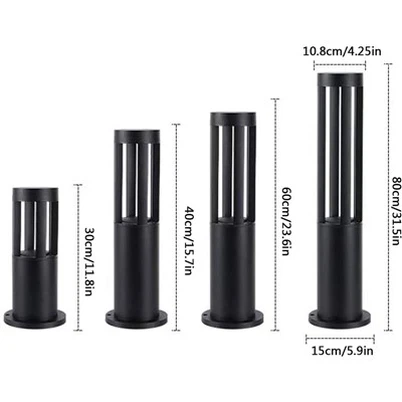
LED decorative light features and advantages
Leave a message
With its unique characteristics, LED decorative lights have gradually become the ideal light source choice. First of all, small size is a big advantage of leds, which are composed of tiny chips encapsulated in epoxy resin, both lightweight and easy to install. Compared with traditional light sources, the power consumption of LED is extremely low, usually the operating voltage is 2-3.6V, and the current is only 0.2-0.03A, which means that its power consumption per watt does not exceed 0.1W, which is extremely energy-saving.
Second, the service life of LED is extremely long, can reach 100,000 hours under the right conditions, far more than ordinary light bulbs. Its working principle allows leds to convert almost all electrical energy into light energy, so the brightness is high and the heat is low. At present, the brightness of LED has more than twice that of traditional light bulbs, and there are predictions that there will be brighter LED products in the future.
Environmental protection is also a highlight of LED lights, it is made of non-toxic materials, does not contain harmful substances such as mercury, and can be recycled, in line with the concept of sustainable development. LED light body is durable, internal package structure is stable, not easy to damage, especially suitable for decorative purposes, such as letter lights, signs and track lights.
In addition to decorative uses, LED has a wide range of applications. In the field of lighting, through the combination of design, LED can provide enough indoor lighting, such as night lights, table lamps and garden lights. In the display, LED is used for information display and large screen display, widely used in sports stadiums, airports and commercial centers. In addition, the LED backlight is an ideal choice for liquid crystal displays due to its small size and low power consumption.
In terms of color, leds are known for their single frequency and pure color output, and a variety of colors can be achieved through the wavelength of different materials. A common way to make white leds is to combine a blue LED with a yellow phosphor. Brightness and viewing Angle are affected by LED chip type, packaging method and other factors, there is no unified international standard, but usually measured by the brightness value of the axial spot (MCD), and need to consider the luminous Angle to determine the total light output.