Everything To Know About Led Light Power Factor
Leave a message
What is the power factor (PF) of a led lamp?
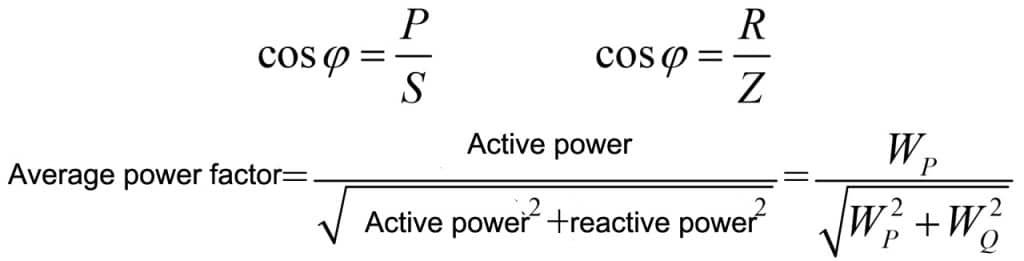
In the AC circuit, the cosine of the phase difference (Φ) between the voltage and the current is called the power factor, which is represented by the symbol cosΦ. In terms of value, the power factor is the ratio of the active power to the apparent power, that is, cosΦ=P/S. The low power factor indicates that the reactive power of the circuit is large.
A lower power factor places a heavier burden on power supply equipment and makes the power grid less stable. The power factor's value depends on the nature of the load in the circuit. For instance, resistive loads like incandescent light bulbs and resistance furnaces have a power factor of 1, which is ideal. Generally, circuits with inductive loads have a power factor lower than 1.
The power factor is a crucial technical parameter in power systems, measuring the efficiency of electrical equipment. A low power factor indicates that the circuit consumes significant reactive power for converting the alternating magnetic field, which in turn reduces equipment efficiency and increases power losses in the electrical lines.
LED power factor measures the efficiency of LED lighting when it's in use. For instance, if an LED has a power factor of 0.95, it means it has an efficiency of 95%. Some LED drivers can achieve a power factor of 0.98, and they might reach 0.99 when operating with DC power. Achieving a perfect power factor of 1 is the ultimate goal, but it hasn't been fully realized yet.
What is the standard power factor for led lights?
At present, there is no specific standard for LED. According to industry regulations, the power factor of lamps below 5W is not required, and if it exceeds 5W, it must reach more than 70%. The current lamps are made according to customer requirements, for example, the power factor required by the power supply department of the customer's location.
Specifically, lamps with low power have a lower power factor and have little impact on the power grid. Because the power is small, it will not cause any harm. If the power factor of high-power lamps is low, the impact on the power grid will be great. Because of the high power, it may cause large equipment loss, overload of power equipment, unstable power grid, harmonic pollution, and so on.
Usually, the power of an LED lamp is not directly related to its power factor. The power factor of the LED lamp depends on the structure of the driving circuit of the lamp. With different circuit structures, the driving power can be the same, but the power factor is different.
What is the difference between driver power efficiency and power factor in LED lamps?
Although both power factor and conversion efficiency refer to the utilization of a power supply, the difference is huge.
Power factor is the ratio of input apparent power to input active power, which has nothing to do with efficiency. The larger the power factor, the smaller the reactive power. Power efficiency is the ratio of input active power to output active power. The higher the efficiency, the smaller the electromechanical loss. Simply put, the loss caused by the power factor is the burden of the power sector, while the loss of conversion efficiency is the responsibility of the user.
The power factor is the ratio of the active power consumed by the power supply to the reactive power.
Power efficiency is the ratio of the input active power to the output active power.
How to calculate the power factor of LED lights?
In the AC circuit, the cosine of the phase difference (Φ) between the voltage and the current is called the power factor, which is represented by the symbol cosΦ. In numerical terms, the power factor is the ratio of active power to apparent power. Apparent power = input voltage * input current = active power + reactive power.
Generally, the power we read directly from the instrument is the active power, and the product of the input voltage and the input current is the apparent power
For example, there is a 10W bulb lamp, the output voltage of the power supply is 30V, the current is 330mA, after the whole lamp is installed, it is displayed on the electrical parameter analyzer, the voltage is 220V, the current is 55mA, and the power is 11.5W.
First of all, there are the following powers to be clear: apparent power, active power, and output power of the power supply
Apparent power=active power+reactive power=220V0.055A=12.1W Active power: that is, the 11.5W directly displayed on the instrument, and the electricity bill is also calculated according to this power. The output power of the power supply: 30V0.33A=9.9W
And power factor=active power/apparent power=11.5w/12.1w=0.95
Power efficiency = power output power/active power100%=30V0.33A/11.5W*100%=86.1%.
Does LED light fixture power factor change with input voltage?
The power factor of LED lamps depends on the design level of the driver (power supply). Generally, if a PFC (power factor correction) circuit is designed in the power supply, the power factor of the power supply is almost independent of the voltage and is unchanged within the normal operating voltage range.
If there is no power supply for the PFC line in order to save costs, the power factor and voltage of the lamp change parabolically, which is about 20% lower than the rated voltage point (varies with different lines), and the power factor is the highest at both ends of this voltage point. , the high-end increases and the low-end decreases, and the power factor decreases.
The efficiency and voltage of the power supply are also parabolic, similar to the changes above. But the efficiency maximum is usually at the rated voltage point.